

01. WHAT WE DO
Introducing MIMSV
New MHD-Based Plasma Shaping Control
Plasma Acceleration
Density Control
Turbulence Reduction
Non-Contact Acceleration
02. OUR VISION
Toward a More Stable Fusion Future
We believe that precision plasma shaping. While complex and still in early development, the MIMSV concept aims to complement established magnetic confinement methods by introducing dynamic, modular shaping zones for improved stability and confinement.
We’re committed to a collaborative approach.
- MHD Flow Stability
- Edge and Core Density Regulation
- Gradient-Sensitive Turbulence Suppression
- Localized Thermal Coupling Enhancements
03. OUR CONCEPT
A Modular Approach
Our system introduces toroidally distributed magnetic constriction zones that shape plasma pressure and flow profiles. These zones are not injection systems, but instead act to modulate internal plasma dynamics — potentially improving energy confinement, reducing turbulence-driven losses, and enhancing edge fueling.
We envision a staged R&D path, starting with linear and partial-loop testbeds to evaluate local flow effects, followed by simulation-aided refinement and eventual integration into toroidal configurations such as stellarators or hybrid tokamaks.
Technical Enablers
Next Steps
04. How We See It
Our Perspective
As a concept-focused development group, our role is to explore new architectures that could expand the toolkit of plasma physics. We aim to support, not replace, existing research pathways — offering alternative methods for modulating plasma conditions.
We’re deeply aware that meaningful progress in fusion depends on scientific rigor, collaborative validation, and transparent iteration. That’s why we’re opening our ideas to critical review, experimental testing, and input from experts across the field.
05. How It Works
Discover the key insights behind our concept
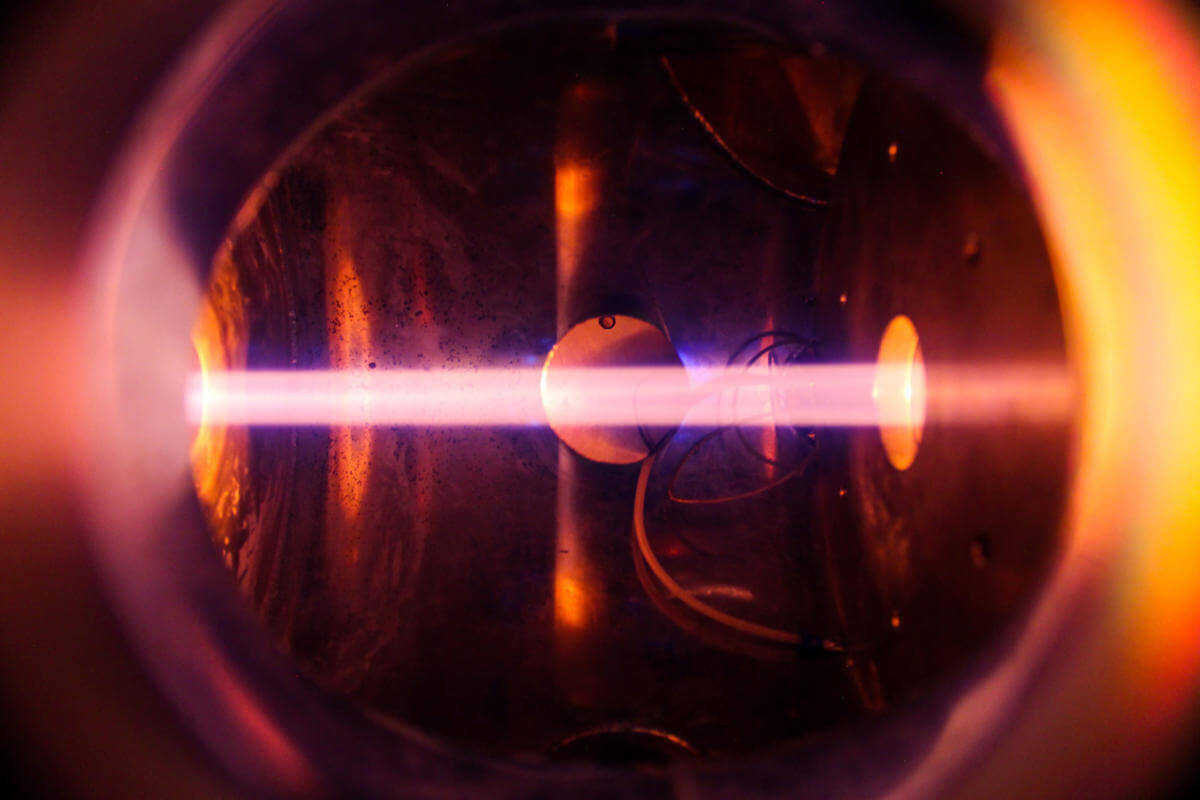
MIMSV is based on the principle that localized magnetic field shaping — when applied in a modular and symmetric way can influence plasma velocity and shear without direct material contact.
Our goal is to create controlled pressure gradients and flow dynamics that affect turbulence and transport behavior in a measurable way.
Theoretical Basis
Simulated Effects
06. To solve challenges
Our Next Step: Building a Strategic Consortium for EIC Pathfinder Open
We are excited to announce our next major milestone — participation in the EIC Pathfinder Open programme. This prestigious EU funding initiative supports bold, high-risk, high-reward research and innovation projects, with funding up to €4 million.
We have already formed the minimum eligible consortium to enter the programme. However, to maximize our chances of success and impact, we are now focused on bringing in strategic partners who share our vision and can strengthen our interdisciplinary approach.